Azerbaijan is expanding its role as an energy hub
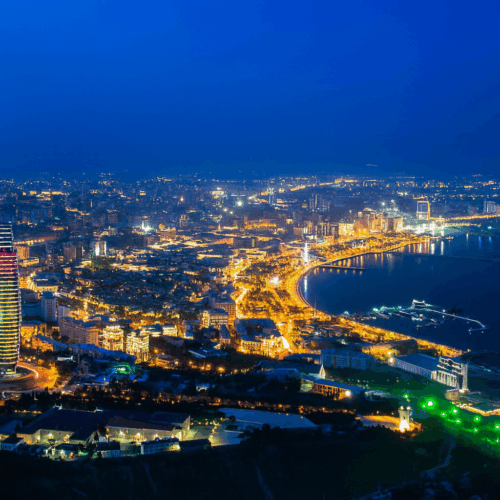
Azerbaijan is pushing ahead with the expansion of both fossil fuels and renewable energy to further strengthen its position as a reliable energy supplier to Europe and emerging markets. Energy Minister Parviz Shahbazov made this statement at the 31st Baku Energy Forum.
In several panel discussions, Shahbazov presented a comprehensive strategy that includes new production projects, international power corridors, and energy partnerships stretching from Southeast Asia to North Africa. Given ongoing uncertainties in global energy markets, security of supply is becoming increasingly important.
Growing Importance for Europe’s Energy Supply
According to the minister, Azerbaijan accounted for 8.1% of the European Union’s pipeline gas imports last year. In total, the country exported approximately 16.7 billion cubic meters of gas to Europe in 2025 and the first four months of 2026, as well as 12.8 billion cubic meters to Turkey. An additional 3.3 billion cubic meters went to Georgia and 800 million cubic meters to Syria.
In total, Azerbaijan now supplies oil to more than 20 countries and natural gas to 16 nations. This broad geographic presence makes the country one of the world’s most significant pipeline energy exporters, according to Shahbazov.
The current disruptions on key international energy routes have further strengthened Azerbaijan’s strategic role. The Caspian Sea is increasingly developing into a central energy corridor between Asia and Europe.
New Production Projects and Expansion of Gas Production
In the fossil fuel sector, production from the associated gas project in the Azeri-Chirag-Gunashli (ACG) field has already begun. The Karabakh oil field is scheduled to come online in 2027. Other major projects, including the full development of the Absheron gas field, Shah Deniz Phase 3, Umid Phase 2, and the Babek gas field, are planned for the coming years.
At the same time, the state-owned energy company SOCAR is expanding its activities in the Middle East, Central Asia, and Africa to strengthen the country’s long-term supply security and market presence.
Shahbazov also warned of the potential impact of new EU regulations on methane emissions. In his assessment, these could pose regulatory challenges for a significant portion of global oil and gas production, thereby increasing the risk of supply shortages.
Billions in Investments in Renewable Energy
At the same time, Azerbaijan is pursuing ambitious goals for the expansion of renewable energy. By 2035, their share of installed power generation capacity is set to rise to around 43%.
The plan is to build a total of 8 gigawatts of new renewable energy capacity by 2032. Of this, 2 gigawatts are to be integrated into the national power grid by the end of next year.
In addition, the country is working on several international power interconnections. The feasibility study for the Green Energy Corridor between the Caspian Sea, the Black Sea, and Europe is set to be completed in July. Starting in 2032, the project could gradually transport up to 3.9 gigawatts of electricity to Europe.
Another energy corridor between Central Asia and Azerbaijan is being supported by the Asian Development Bank (ADB) and the Asian Infrastructure Investment Bank (AIIB). The corresponding feasibility study is expected to be available in 2027.
New Energy Partnerships Outside Europe
In addition to Europe, Azerbaijan is also intensifying its energy cooperation with the D-8 countries, an association of major developing nations.
Between 2022 and 2025, SOCAR supplied approximately 2.5 million tons of crude oil to Indonesia. In addition, a three-year LNG supply contract with the Egyptian General Petroleum Corporation (EGPC) has been in place since last year. Under this agreement, more than 1.3 million tons of liquefied natural gas have been delivered to Egypt to date.
Negotiations regarding LNG deliveries to Bangladesh have also been concluded. Furthermore, Baku sees further potential for cooperation with Malaysia in the technology sector, as well as with Nigeria, a major natural gas producer.