Water conflicts are straining diplomacy in Central Asia
Water issues are increasingly becoming a central theme in regional diplomacy in Central Asia. This became clear at the fourth high-level international conference on the UN Decade “Water for Sustainable Development 2018–2028,” which took place this week in the Tajik capital of Dushanbe.
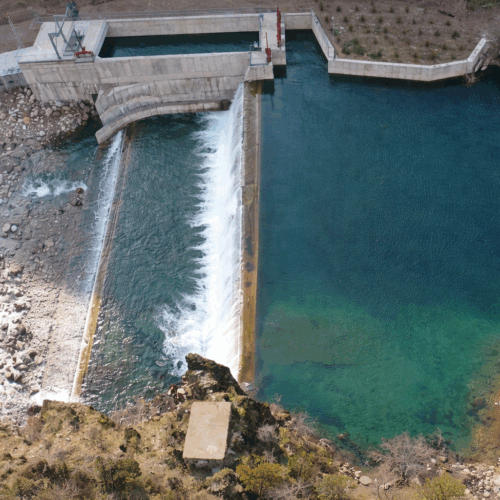
On the one hand, the Central Asian states presented themselves as reliable partners in addressing common challenges. Kazakhstan, Tajikistan, and Uzbekistan, for example, presented a new agreement on water releases from the strategically important Bahri-Tojik Reservoir for the irrigation season from June to August 2026.
On the other hand, existing tensions also came to light during the conference. Kyrgyzstan, in particular, made it clear that the distribution of costs and benefits in regional water management remains contentious.
Kyrgyzstan calls for greater financial participation
The government in Bishkek has argued for years that the downstream states—particularly Uzbekistan and Kazakhstan—do not contribute sufficiently to the financing of water infrastructure from which they benefit significantly.
In light of increasing water scarcity, climate change, and accelerated glacier retreat in the mountainous regions of Kyrgyzstan and Tajikistan, this debate continues to gain significance.
Erlist Akunbekov, Deputy Chairman of the Council of Ministers and Minister of Water Resources, Agriculture, and Processing Industry of Kyrgyzstan, reminded participants of the central role that the mountainous regions play in Central Asia’s water supply.
“Without glaciers, there is no water in the rivers, and without water in the rivers, there is no life in the valleys,” Akunbekov explained.
The melting of glaciers affects not only individual countries but poses a challenge for the entire region. Kyrgyzstan possesses significant water resources, nearly all of which originate within its national territory. At the same time, the country uses only about one-third of these resources itself, while the majority flows into neighboring states.
Akunbekov emphasized that maintaining reservoirs, water infrastructure, and mountain ecosystems requires substantial financial resources.
“We must honestly acknowledge that our country is currently not receiving adequate compensation for these services,” he said.
In 2025 alone, Kyrgyzstan invested around $80 million in its water sector. A large portion of these funds went toward modernizing outdated infrastructure from the Soviet era.
According to the Kyrgyz government, the region needs joint financing mechanisms and more modern, cross-border water management in the long term.
Cooperation on Irrigation
Transboundary water resources are of crucial importance for agriculture in Central Asia. Many farming areas depend on water inflows from the mountainous regions.
Against this backdrop, the agreement on the Bahri-Tojik Reservoir is seen as a positive signal for regional cooperation. During the summer months, additional water is to be diverted, particularly to the Kazakh region of Turkestan, to meet rising irrigation needs.
The Kazakh Minister of Water Resources and Irrigation, Nurzhan Nurzhigitov, described the agreement as the result of constructive cooperation and mutual support within Central Asia.
The measures taken are intended to help ensure irrigation during the growing season and stabilize agriculture in the affected regions.
Afghanistan is shifting the regional water balance
In addition to the five Central Asian states, Afghanistan is increasingly coming into focus as a key player in regional water issues.
The Amu Darya, one of Central Asia’s most important rivers, runs along Afghanistan’s northern border. For decades, Afghanistan played only a limited role in the use of this water resource due to domestic political challenges.
However, the government in Kabul is now pursuing ambitious plans for irrigation and agricultural development. At the center of these efforts is the construction of the Qosh-Tepa Canal, a major project that could divert significant amounts of water from the Amu Darya in the future.
Experts estimate that the canal could utilize a significant portion of the river’s water in the long term. This is being closely monitored by Central Asian states, as it could alter water availability for regions downstream.
In recent months, the Taliban government and its Central Asian neighbors have expanded their economic ties. Uzbekistan, in particular, is pursuing pragmatic cooperation with Kabul.
Nevertheless, the question remains as to what long-term impact the Qosh-Tepa Canal will have on water distribution in the region.
Technical risks are causing additional concern. Experts warn that if construction quality is inadequate, significant water losses could result from leaks.
Water is becoming a strategic factor
The conference in Dushanbe made it clear that water in Central Asia is no longer merely an environmental or infrastructure issue. It is increasingly becoming a strategic resource that influences economic development, agriculture, energy supply, and regional stability in equal measure.
With advancing climate change, retreating glaciers, and rising water demand, pressure is mounting on the region’s countries to find common solutions.
Recent agreements show that cooperation is possible. At the same time, debates over financing, infrastructure, and new water projects make it clear that the challenges for regional water policy are likely to increase in the coming years.