Emirates Leave OPEC: Will Russia Now Be Left Behind?
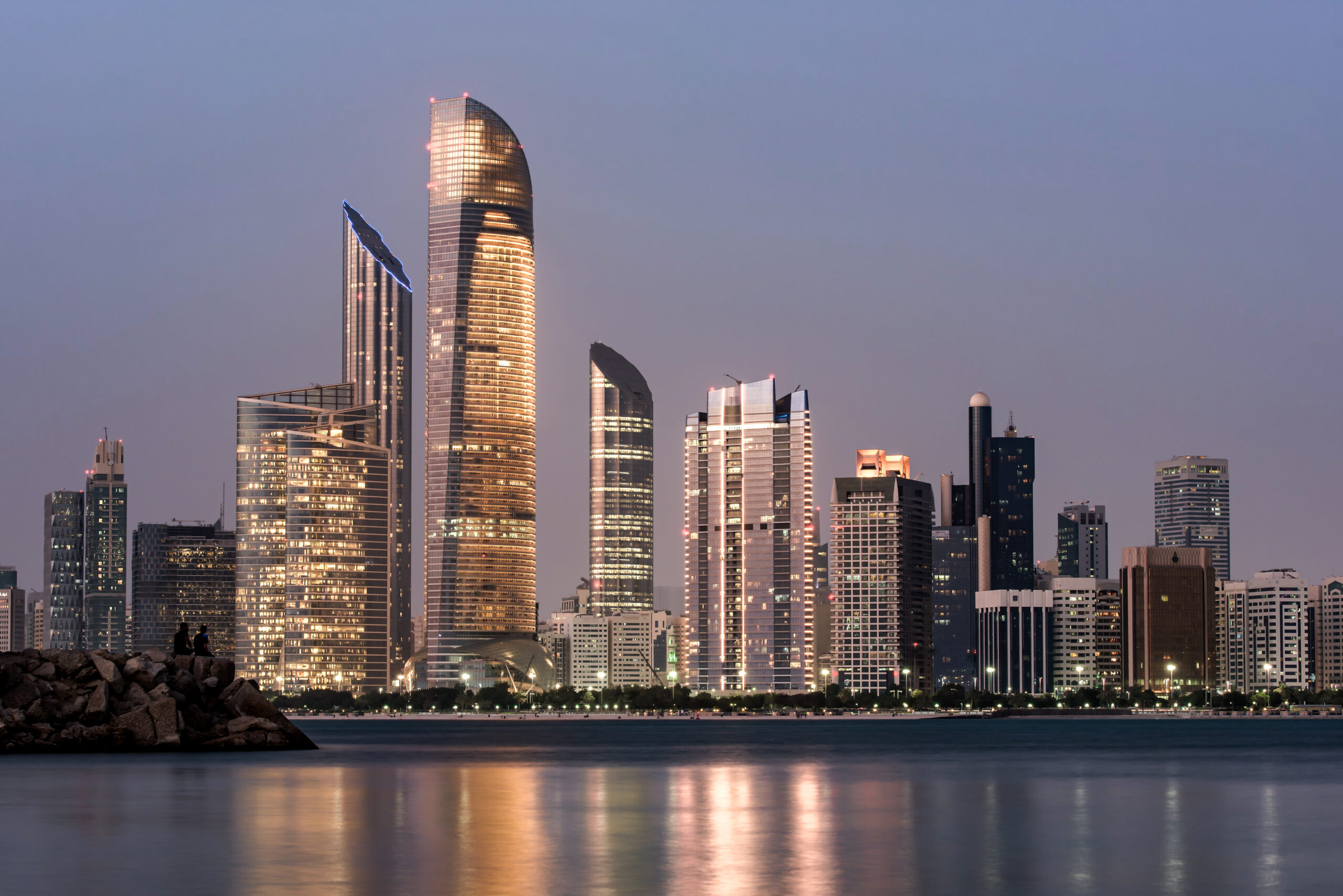
On May 1, the United Arab Emirates (UAE) withdrew from the OPEC oil cartel. In a statement released by the state news agency WAM, the move was justified as a “review of production policy” and “our commitment to meeting the urgent needs of the market.” This effectively means that the Emirates intend to produce more oil than they are currently entitled to under the production quota system of OPEC and the expanded OPEC+ alliance, which the Emirates are also leaving.
Hormuz Crisis Overshadows OPEC Exit
For years, the Emirates have been complaining—particularly to the alliance’s dominant partner, Saudi Arabia—that their own production quota is too low. Now is the “perfect time” to leave, because it will have only a minimal impact on the oil price, UAE Energy Minister Suhail Al Mazrouei told the media. In doing so, he addressed the fact that his country had recently been far from utilizing its own OPEC production quota of 3.4 million barrels per day. In March, the Emirates’ oil production amounted to only 2.4 million barrels per day, reports the International Energy Agency (IEA). That was 1.2 million barrels per day less than in February. The slump can only be partially explained by the closure of the Strait of Hormuz, as the Emirates have an export terminal on the Gulf of Oman and are not as dependent on transport through the strait as, for example, Kuwait. However, since the U.S. and Israeli attack on Iran in late February, the UAE—and its oil infrastructure in particular—has been a prime target of Iranian retaliatory strikes.
In fact, the oil markets barely reacted to the UAE’s withdrawal from OPEC. Two days after the decision was announced on April 28, the oil price reached $126 per barrel, its highest level since the crisis month of March 2022. The markets’ attention was entirely focused on the renewed tensions between the U.S. and Iran and the blockade of the Strait of Hormuz.
OPEC in an “existential crisis”
Nevertheless, observers view the move as significant. Javier Blas, the renowned commodities columnist for the U.S. business news service Bloomberg, sees OPEC as facing the “greatest existential crisis” of its 65-year history. Unlike previous withdrawals, including Qatar in 2019 and Angola in 2023, the UAE has more geopolitical influence, more oil, and above all, more money to go its own way, Blas argues. Other countries could follow suit, the analyst says. He counts OPEC founding member Venezuela among the most likely candidates to leave, as it could exit the oil cartel following potential new elections and a likely subsequent change in power. Within the expanded OPEC+ cartel, which includes heavyweight Russia, Kazakhstan could follow the UAE’s lead, according to Blas. According to the IEA, Russia’s neighbor produces around 1.4 million barrels per day—significantly more than its OPEC+ quota of approximately 1 million barrels per day.
Siluanov warns of falling oil prices
In the long term, the weakening of OPEC will put downward pressure on oil prices, according to the consensus among observers. Russia’s Finance Minister Anton Siluanov apparently shares this view. He explained at an event that the Hormuz blockade is currently still limiting oil supplies. However, the minister noted that if, after the crisis, OPEC countries produce as much oil as they can without coordinating with one another, prices will fall. Russia must prepare for this scenario and expect at least three years of low oil prices and correspondingly lower oil revenues for the state budget. That is how long it will take for the market to adjust and for U.S. shale oil producers, for example, to be forced to give up, Siluanov said. For that to happen, the oil price would have to fall permanently below the cost of production for the U.S. fracking industry, which Siluanov said stands at $60 per barrel. Deputy Prime Minister Alexander Novak, who is responsible for the energy sector in the government, commented less explicitly on the UAE’s withdrawal from OPEC. The Iran crisis has led to a shortage of crude oil, which is why a “price war” among producing countries is “out of the question in the current situation,” Novak explained. He did not address the period following this in his remarks.
Controversial Production Figures
The amount of oil produced by the UAE is a matter of debate. In its report for 2025, published at the end of April, OPEC estimates the volume at an average of just 3.1 million barrels per day. The International Energy Agency (IEA), on the other hand, estimates the volume at 3.46 million barrels, while the economic research firm S&P Global puts it as high as 3.55 million barrels. Such significant discrepancies exist only regarding Iraq’s production. For the other members of the cartel, the IEA and OPEC are generally closer in their estimates. As early as 2024, S&P Global suspected that the Emirates were systematically underreporting oil production figures to conceal the fact that they were exceeding their production quotas. For example, from January to October 2024, the UAE reportedly exported an average of 3.6 million barrels of crude oil per day by ship. Yet the OPEC production quota for that period was just under 3 million barrels per day.
Based on OPEC’s official figures, the Emirates was the world’s eighth-largest producer last year, with 3.1 million barrels of crude oil per day. The small Gulf state thus belongs to the second tier of oil-producing countries, along with China (4.3 million barrels), Iraq (3.8 million), Brazil (3.7 million), and Iran (3.3 million). The three oil giants—the U.S. (13.6 million), Saudi Arabia (9.5 million), and Russia (9.1 million)—are in a class of their own.
UAE Has Second-Largest Reserves
The state-owned oil company Adnoc, which is responsible for virtually all of the Emirates’ production, estimates its “sustainably available production capacity” at 4.85 million barrels per day. Adnoc confirmed at the end of 2025 that an expansion to 5 million barrels per day is planned by 2027. This means that the UAE had unused capacity of around 1.7 million barrels per day last year.
The IEA, however, estimates the UAE’s sustainable production capacity at only 4.3 million barrels per day. Accordingly, the Emirates’ unused capacity amounted to around 0.8 million barrels per day in 2025. Yet even with this conservative estimate, the Emirates would have the second-largest production reserve in the world. In January 2026—that is, before the recent Iran crisis and the disruptions to Russian production caused by Ukrainian attacks—only Saudi Arabia, with 2.4 million barrels of production reserve, ranked ahead of the UAE. Iraq came in third with just under 0.6 million barrels of reserve.
UAE on Track to Become Top Exporter
OPEC estimates the Emirates’ exports last year at an average of 2.9 million barrels per day. With more than 90% of production, this would be by far the highest export share among the major producing countries. By volume, the UAE ranked sixth, behind Canada (3.7 million) and Iraq (3.3 million). The U.S. exported just under 4 million barrels per day, and Russia, as the world’s second-largest oil exporter, was not too far behind the UAE with 4.5 million barrels. Only Saudi Arabia was able to pull significantly ahead with exports of 6.4 million barrels per day.
Withdrawing from OPEC and OPEC+ allows the UAE to utilize its production capacity more fully. With the expansion already planned, production could rise by up to 1.9 million barrels per day compared to 2025. If this additional volume were to go almost entirely to exports, as has been the case so far, exports could rise to 4.8 million barrels per day, based on OPEC’s figures for 2025. The Emirates could thus replace Russia as the world’s second-largest oil exporter. Furthermore, the withdrawal from OPEC clears the way for new investments by the Emirates in oil production. “Don’t be surprised if the Emirates soon announce even more ambitious production targets for 2030,” noted Bloomberg analyst Javier Blas.
The Belgian commodities information service Kpler estimates that China, in particular, is likely to purchase more oil from the Emirates in the future. Russia would be doubly affected by this. Not only could it lose market share in China—the most important buyer of Russian crude oil—to the Emirates, but the additional oil supply from the Gulf region would also drive down import prices to China, thereby weighing on Russian export revenues.
This article first appeared in the exclusive newsletter of the German-Russian Chamber of Foreign Trade