Tax reform and stricter controls are fueling a rush to cash
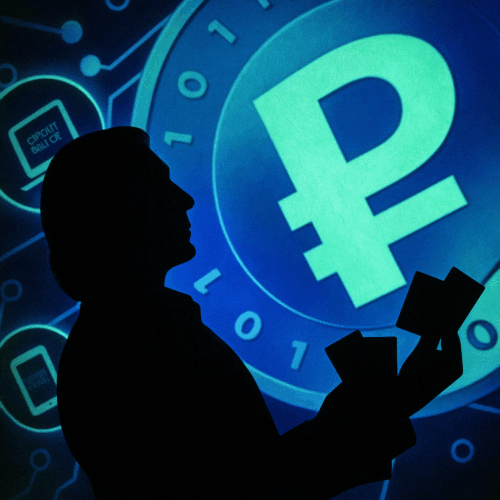
Cashless payments have been on the rise in Russia for years. The government is increasing its investment in the fintech sector while simultaneously expanding its tax and financial systems. This makes the recent increase in cash usage in Russia all the more unusual. Experts interpret this as a reaction by businesses and citizens to the rising tax burden and stricter transfer controls by the authorities.
In the period from May 1 to May 11 alone, Russians withdrew 210.5 billion rubles (2.4 billion euros) in cash—a fivefold increase compared to the same period last year, when 41.2 billion rubles (48 million euros) in cash were recorded. In April, 607 billion rubles (6.9 billion euros) in cash entered circulation, which was the highest figure since 2022, excluding the traditionally high December figures. The last time cash in circulation rose more sharply was in September 2022 following the partial mobilization. At that time, the population withdrew a net total of 930 billion rubles (10.6 billion euros) in cash. In March 2026, more than 300 billion rubles (3.4 billion euros) entered circulation, the highest figure outside of December in 2.5 years. At the end of April, the total cash supply rose above 20 trillion rubles (230 billion euros) for the first time ever.
Experts cite several reasons for the run on cash. These include the growing shadow economy resulting from tax hikes, as well as stricter controls on money transfers between private individuals. Another factor is the disruption of the Russian internet and the resulting problems with cashless payments. As of January 1, the value-added tax (VAT) in Russia was raised from 20% to 22%. This places a particular burden on micro-enterprises and small and medium-sized businesses. While these businesses paid VAT last year on annual turnover of 60 million rubles or more, the 2026 tax reform lowers the threshold to 20 million rubles. In 2027, the threshold will drop further to 15 million rubles (158,000 euros) and finally to 10 million rubles (105,000 euros) in 2028.
Tax Authority to Take a Tougher Stance
Starting next year, the Russian tax authority plans to scrutinize money transfers between private individuals more closely. The focus will be on undeclared income exceeding 2.4 million rubles per year, equivalent to approximately 27,450 euros. At the end of March, the Russian government introduced a bill to parliament that would allow the tax authority to request information from the Russian Central Bank regarding citizens engaged in unreported business activities. This primarily concerns Russian citizens without sole proprietor or self-employed status who regularly receive payments of more than 200,000 rubles (2,300 euros) per month into their bank accounts. According to experts, the measure primarily affects freelancers, landlords, and self-employed specialists. The measure could take effect next year. The government expects it to generate tax revenues of more than 50 billion rubles per year, or 572.2 million euros.
Millions of citizens affected
According to the Russian Chamber of Commerce and Industry (TPP), this measure could affect seven to ten million people. Natalia Milchakova, chief analyst at the international financial services provider Freedom Finance Global, estimates, however, that the proportion of tax evaders with an annual income exceeding 2.4 million rubles (27,450 euros) in annual income accounts for no more than 1–2% (about 200,000 people) of the total workforce in Russia.
The tightened tax controls are aimed not only at “shadow entrepreneurs” but also at citizens with mixed income, says Sofia Lukinova, head of legal affairs at the Russian consulting firm WMT Consult. The expert includes in this category workers with unreported side jobs or income from renting out real estate. The stricter tax controls inevitably led people in Russia to circumvent the rules, Lukinova continued. And this is where cash comes into play above all.
Does Cash Threaten the Financial System?
Russian economist Andrei Barchota estimates that demand for cash could rise by 2 to 3 trillion rubles—equivalent to 22.8 to 34.3 billion euros—next year as a result of stricter tax controls. Generally speaking, the rule is: the more cash in circulation, the less efficient the monetary system. This affects banks’ liquidity. Economic actors holding cash are missing out on investment interest, while banks lack affordable debt capital, explains Egor Susin, Head of Market Strategies at Gazprombank.
An alternative source of liquidity is the central bank, from which banks borrow money. An excessive outflow into cash could lead to a structural liquidity deficit in the banking sector, warns Sofia Donez, chief economist at T-Investiziji at Russia’s T-Bank. This means that banks’ liabilities to the central bank exceed their own funds held in deposit and correspondent accounts at the central bank. Experts agree, however: it is still too early for long-term forecasts. The key factor is how long the cash trend persists.
An excess of cash can also fuel inflation. Economists currently see no cause for concern regarding the public’s inflation expectations, however. People are not turning to cash because they are desperate to get rid of their money, but because there are external triggers that make this form of payment more convenient, explains Sofia Donez of T-Bank.
International Cash Ranking
The share of cash in Russia’s total money supply has been between 13% and 15% for several years. This places the country in the same league internationally as nations such as the UK (13%), the US (14%), Canada, and Israel (both 15%). Norway, Iceland (8% each), South Korea, Sweden, and Denmark (10% each) have the lowest cash shares in the world, according to a ranking by the Scandinavian travel financial services provider Forex. In Germany, people use cash far more frequently. At 40%, Germany ranks behind Spain (44%), Turkey, and Poland (both 45%). The highest cash circulation in the world is found in Myanmar (98%), Ethiopia, the West African country of Gambia (95% each), Albania, and Cambodia (90% each). This article was prepared for the German-Russian Chamber of Foreign Trade.